
Basic air conditioning maintenance
Keep your air conditioner running sensibly between professional services with a few safe owner checks. Electrical, gas and refrigerant work should always go to a qualified technician.
Start with safe visual checks
A basic maintenance routine begins with observation. Before touching anything, switch the unit off at the control and let moving parts come to a stop. Look for obvious signs of trouble such as water where it should not be, loose front panels, blocked grilles, unusual staining around the unit or a musty smell when the system starts.
Listen as well as look. New rattles, scraping sounds, repeated clicking or a change in the usual airflow noise can point to a developing fault. Owners can note these changes and use the guidance in the contractors category when choosing a business to contact. If there is any burning smell, tripping power or visible damage to wiring, stop using the system and leave it to a qualified technician.
Check and clean condenser coil and air filters
Air conditioners depend on free airflow. Indoors, make sure curtains, furniture, boxes and decor are not blocking supply or return grilles. If a wall unit is partly hidden by a shelf or stacked storage, cooled air cannot move properly through the room. In offices, it also helps to check that papers, files or display boards have not been placed over vents.
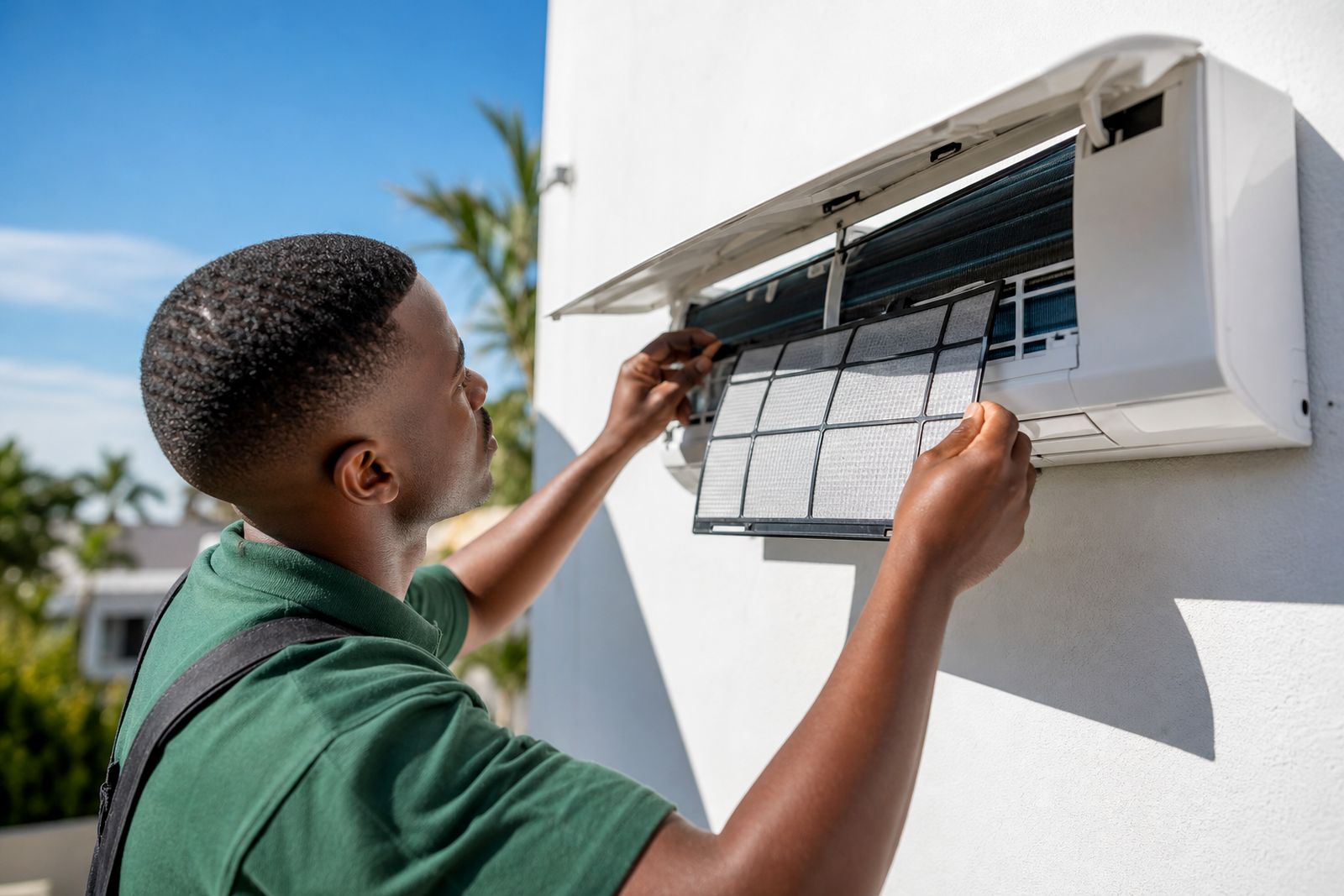
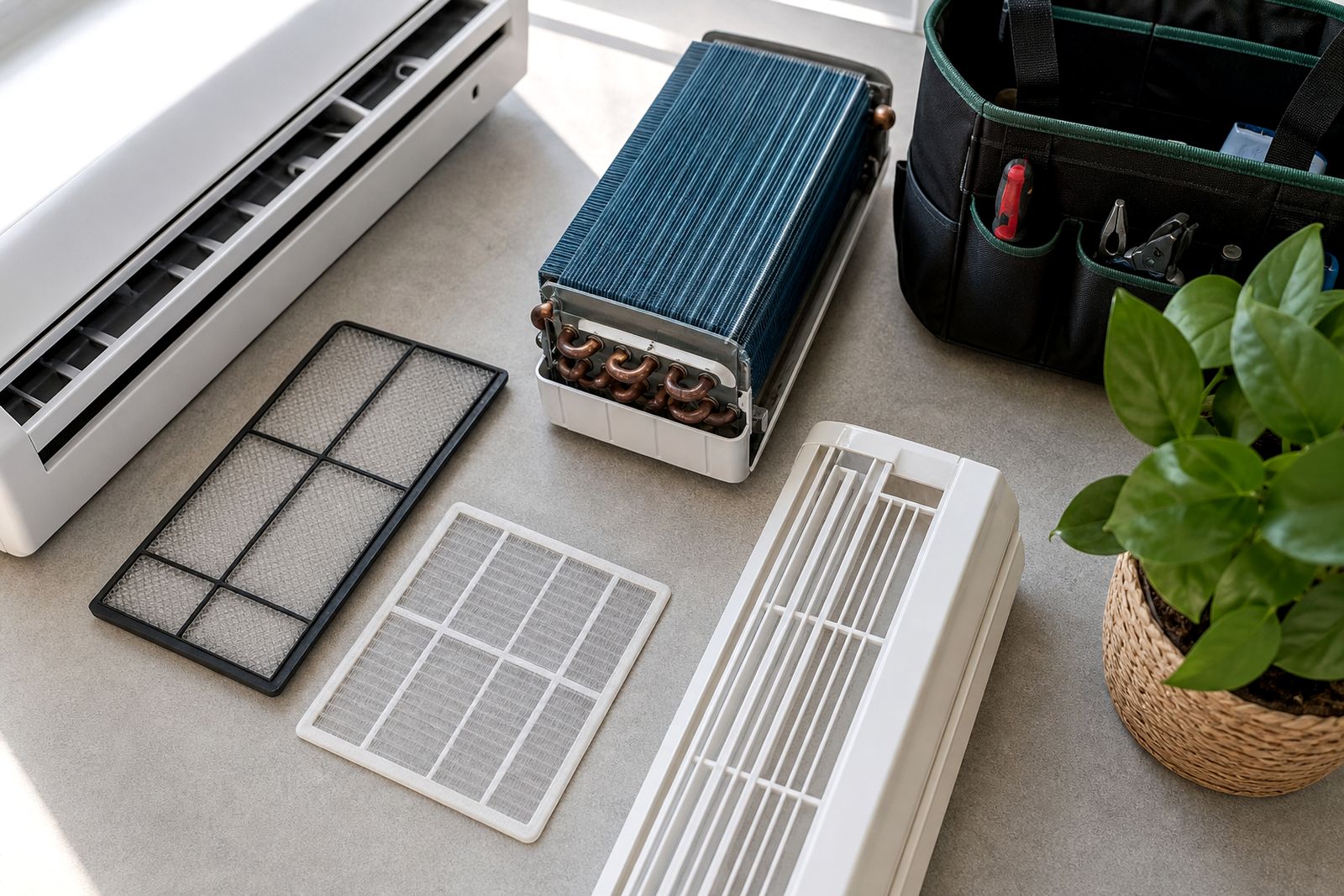
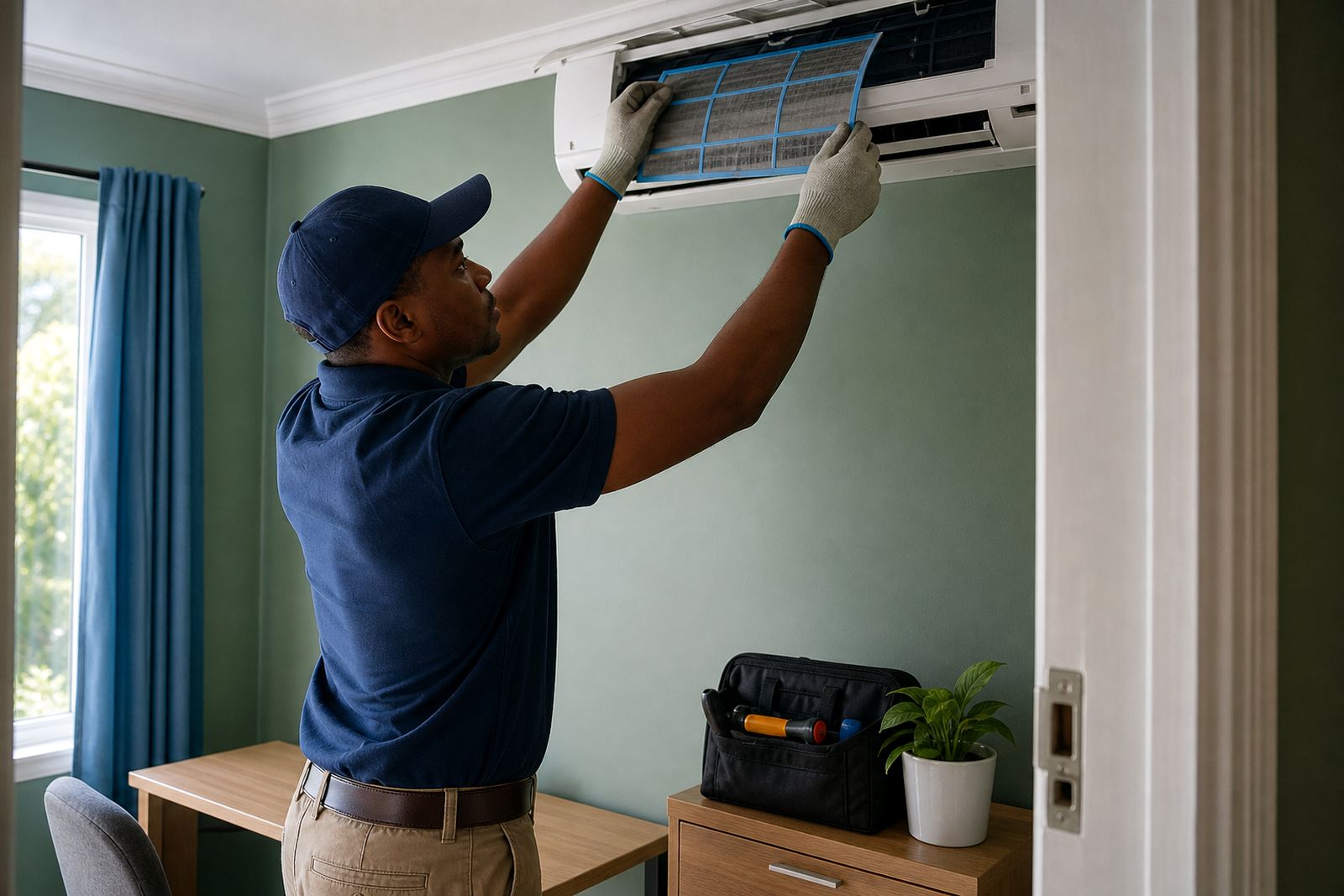
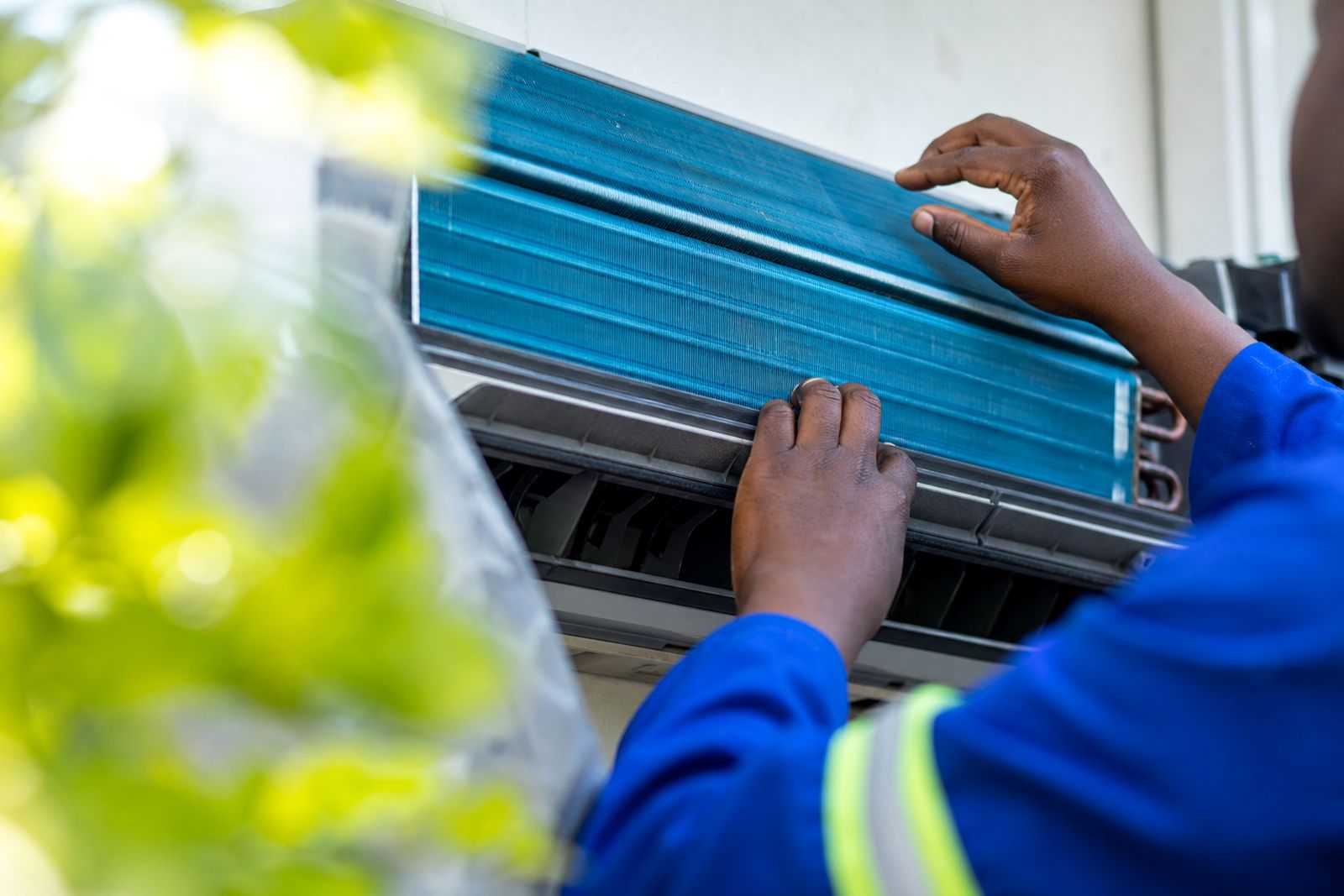
Foreign material on the condenser coil and air filters of the air conditioner reduces the system's capacity to remove heat. Owners can check the filter and keep vents open, but condenser coil cleaning is for a qualified technician. Outdoors, keep the area around the condenser clear of leaves, grass clippings, plastic, packaging and other debris. Trim back overgrown plants so air can move in and out freely. Do not force tools into grilles and do not bend fins.
- Keep vents open and unobstructed.
- Move stored items away from indoor returns.
- Clear loose debris from around the outdoor unit.
- Note reduced airflow, even if the system still cools.
Watch for drainage and moisture problems
Small drainage issues often show up before a major breakdown. During humid weather, some moisture is normal, but water dripping inside the room, staining on a wall or ceiling, or persistent puddling near the indoor unit needs attention. If a drain point is visible and easy to reach, check that it is not obviously blocked by dirt or slime.
Condensation can also be linked to poor airflow, dirty components or incorrect settings. Owners should avoid opening sealed parts or trying chemical treatments. Wipe up water around the unit, protect nearby finishes and arrange professional help if leaking continues. If mouldy odours are present, mention them when making an enquiry through the contact form or use the guidance in the directory when choosing which type of HVAC business to approach.
Review controls and everyday operation
Sometimes a system appears faulty when the problem is simply a setting that has changed. Check the mode, temperature setting, fan setting and timer. A remote with weak batteries may respond poorly, and a wall control may have been adjusted without anyone noticing. In shared spaces, agree on sensible settings so people are not changing the controls throughout the day.
Observe how the unit cycles during normal use. If it starts and stops too often, runs for long periods with little effect, or struggles at times when it usually performs well, make a note of the conditions. These details can help a technician assess the issue. For more on steps to troubleshooting air conditioning, the portal also publishes guides on choosing a system and lowering your cooling bill.
Know where owner care ends
Basic air conditioning maintenance is often the better and more cost effective means of spotting problems early, but owner care is limited to simple checks, keeping the area clean and using the controls correctly. It does not include electrical testing, removing covers, handling motors, opening refrigerant circuits or working on gas related parts. Those tasks need a qualified technician with the right tools.
If your routine checks point to a fault, use the contractors category for guidance on what to ask when choosing a business, or browse air conditioning topics for general information. We also publish related guides on keeping filters clean, why clean coils matter and basic air conditioning maintenance tips. Businesses can ask about a directory listing through the contact form. Readers can also use the contact form for questions. Airconditioning Zone is an information portal and directory, so we do not sell, supply, fit, service or repair equipment, and we do not quote for work.
Also worth a look

Ask about the guides or a directory listing
Send a note through our contact form with your question or your business details, and we will come back to you.
Open the contact form